
A category that does not exist yet
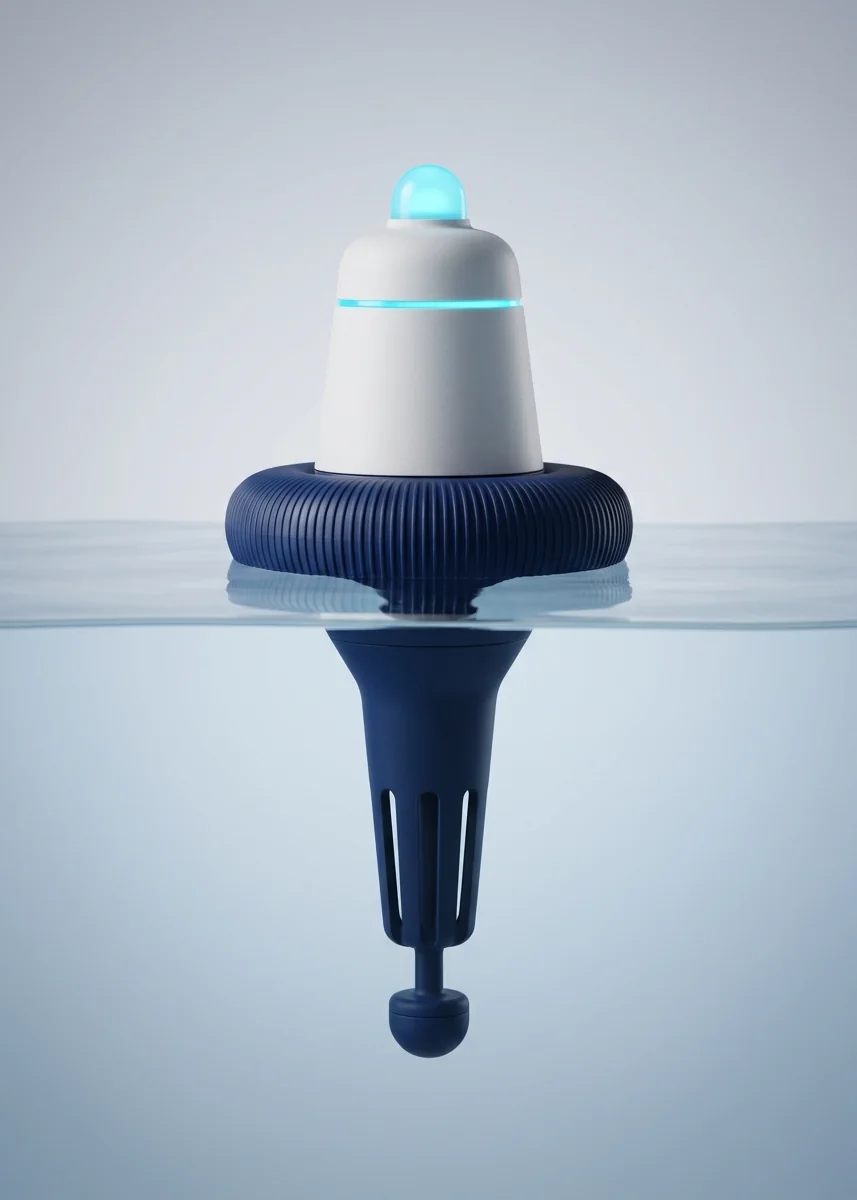
Millions of hot tubs sit outside in freezing climates with no telemetry of any kind. The monitors that do exist are Wi-Fi consumer gadgets on subscriptions, and they go quiet in exactly the conditions that destroy a tub. We built the other thing: an instrument, sold once, that reports over satellite when the grid is down.
Why this, and why now
Three observations that between them define the product.
The asset is valuable and undefended
A hot tub is a $10,000–$20,000 appliance holding 1,500 litres of heated water, installed outdoors, in climates that reach −30 °C. A single freeze event costs $2,000 to $12,000 to put right. Nothing in the box warns anyone.
The incumbents solve the wrong problem
Existing monitors are chemistry conveniences on home Wi-Fi and monthly plans. They are useful in July. They cannot help in January, because a power cut takes the router with it — and a subscription lapse takes the whole product.
The silicon finally allows it
Satellite messaging used to mean a second radio, a second certification and a second bill. A current cellular modem carries LTE-M, NB-NTN satellite and GNSS on one die. That collapse in cost is what makes a subscription-free device viable.
One transaction, no subscription
Hardware margin, taken once, with the connectivity cost provisioned against it up front. No recurring revenue to defend, and no churn to model.
| Channel | Unit price to the channel | Channel margin | Price to the owner |
|---|---|---|---|
| Direct to consumer | — | — | $899 |
| Authorized Retailer | $799 | $100 per unit | $899 |
| Certified Service Partner | $749 | $150 per unit, plus service | $899 |
| Portfolio and strata | $699 | Taken in the service agreement | Contracted |
Cost side
The first-pass bill of materials came in at $365 a unit. A shadow BOM is maintained part by part with volume-tier pricing against it, and the production target sits materially below that figure — the single largest line, the separate satellite module, was removed outright when the design moved to a modem that carries NB-NTN natively.
Connectivity side
Telemetry runs about 80 KB a month per device on LTE-M, and satellite messages are metered per message and policy-capped in firmware. That is what makes a prepaid lifetime data allowance a line item on the BOM rather than an open-ended liability.
What is difficult to follow us on
None of these is a patent. All of them are hard to copy quickly, which is the part that matters.
One board, two populations, one certification
The Guardian is the Sentinel board with the chemistry island unpopulated. Same layout, same firmware image, feature-flagged by hardware ID. Two price points and one manufacturing line — and critically, one radio certification rather than two.
The fault logic is the moat, not the sensors
Anyone can buy a pH probe. Recovering pump ripple from a pressure signal, learning a per-installation cooling curve, and inferring a power cut from the absence of circulation is work that only exists after a lot of tubs have been watched.
Galvanic isolation, done properly
The classic failure of multi-probe water monitors is crosstalk through the conductive water. Putting the whole electrochemical front end on an isolated island — its own supply, its own ground — is a board-level decision that cannot be retrofitted in firmware.
A channel with an incentive to keep us there
The dealer does not make their money on our margin. They make it on retained chemical sales and service leads the device generates. That is a switching cost measured in their revenue, not in our contract.
Four channels, one product
In rough order of cost per acquired customer.
Dealers and service companies
The fastest path to scale: every hot tub service business becomes a sales force with a reason of their own to sell. One conversation places fifty units instead of one.
Resort strata and property portfolios
Buildings hate liability. A centralised dashboard with escalation from owner to building manager, and an evidence trail for the insurer, sells to a committee rather than to a shopper.
Short-term rental operators
A frozen tub is a cancelled booking and a refunded week. Owners of remote rentals buy asset protection as an operating cost, not as a gadget.
Direct to consumer
Targeted digital for new hot tub owners and second-property owners, plus the trade shows where the dealer conversations start.
Who we want to hear from
If you are any of these, there is a conversation worth having.
Distributors
Regional and national distribution into pool and spa retail, in North America and in cold-climate Europe.
Manufacturers
Hot tub OEMs who want factory-fit monitoring as a differentiator, under their own badge.
Insurers and brokers
Water damage and freeze claims are a large, well-understood loss category. A monitored tub is a better risk, and we can prove it per device.
Investors
Hardware investors comfortable with a one-transaction model and a channel-led route to market.
The full pack, under NDA
The device design document, the fault-detection logic, the part-level bill of materials with volume tiers, the go-to-market plan and the financial model. Tell us which parts matter to you and we will send those.