Guardian
Asset protection. Nothing else to think about.
$599 CAD
No subscription, ever
Order the Guardian3-year warranty · 60-day returns
Every fault detector, the full satellite-backed alert path, and a battery that outlives the warranty. No chemistry probes, nothing to calibrate, nothing to drift.
Who it is for
Owners with a service contract, rental operators, and anyone who wants a smoke alarm for their hot tub rather than a science project.
What you get
- Freeze prediction with time-to-freeze in the alert
- Leak and rapid water-loss detection
- Power-loss inference — no mains connection required
- Lid-open and heat-loss alerts
- Labouring pump and clogged-filter advisories
- LTE-M with satellite escalation for critical alerts
What the Guardian watches, and how the alert gets out
Five measurement channels, the physics behind each fault class, and the path an alert takes off the property when the power and the cell tower are both down.
Read the transcript Hide the transcript
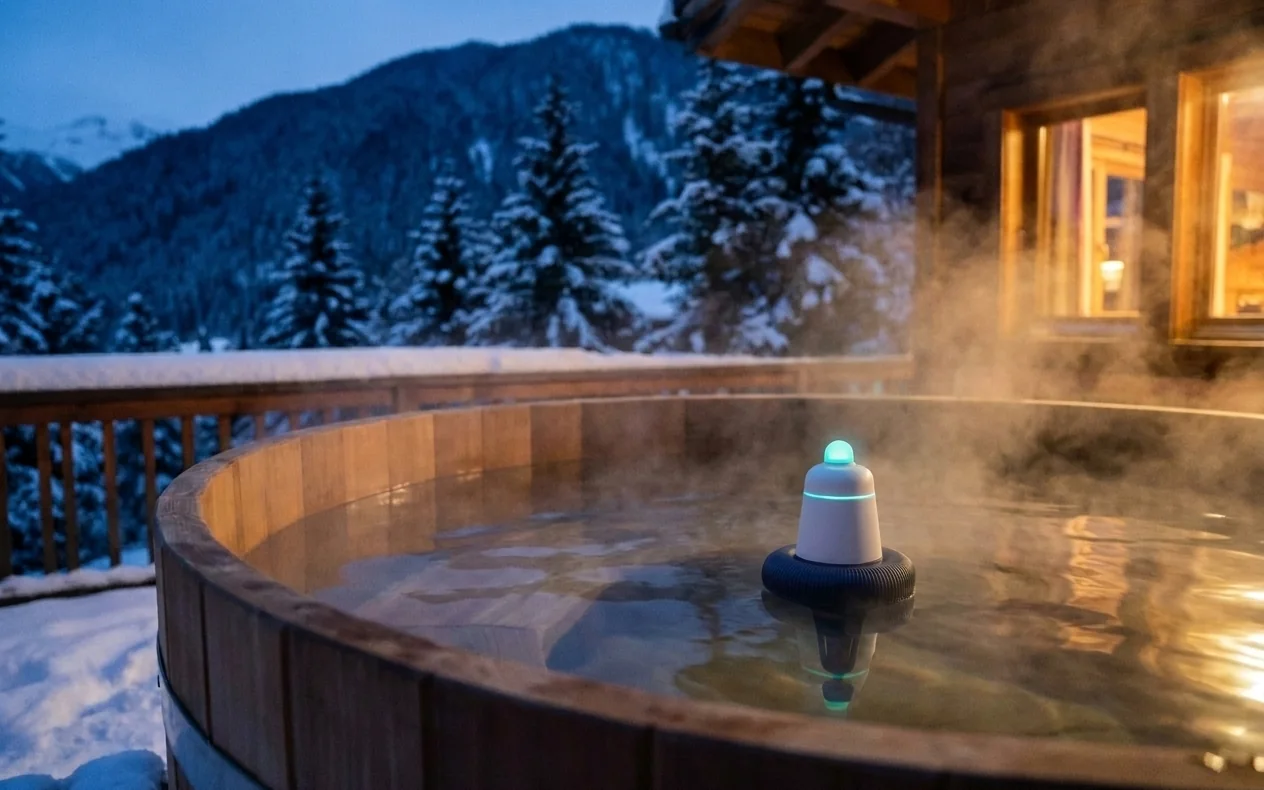
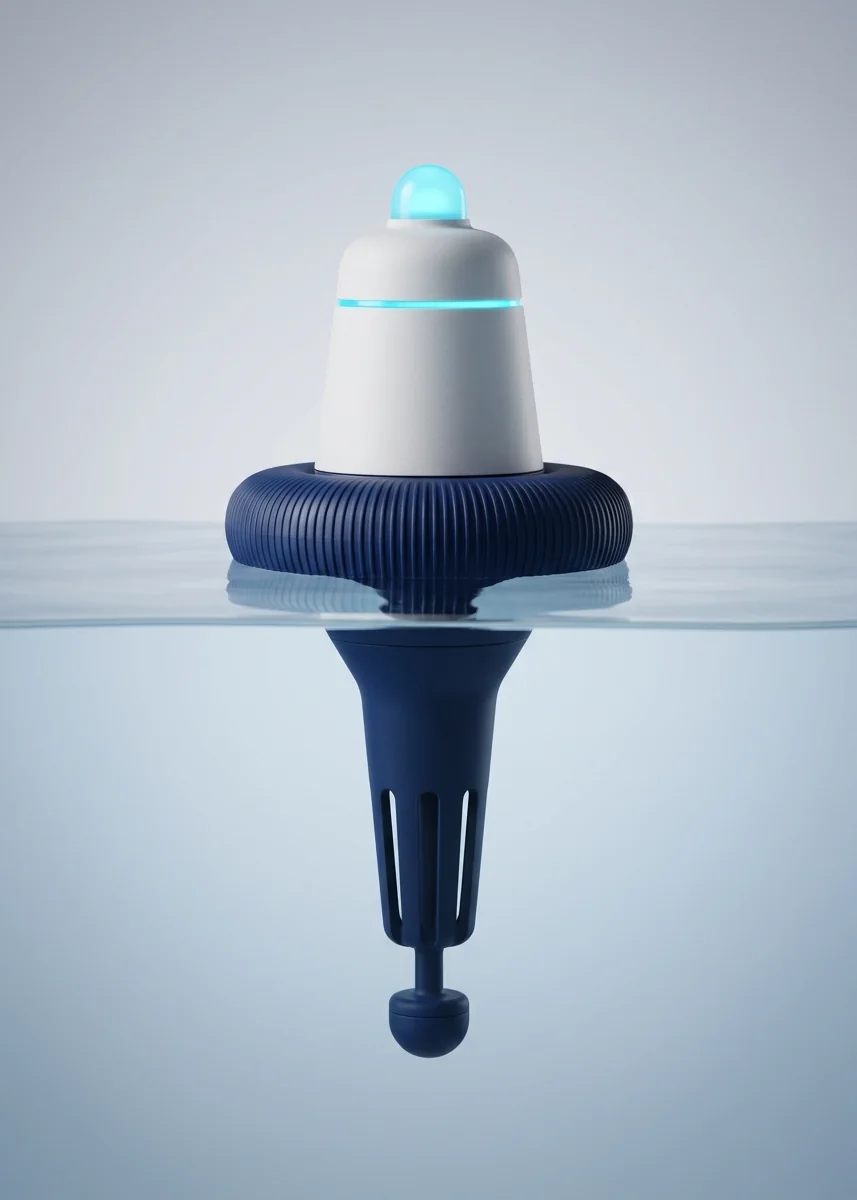
It is two in the morning and the power has gone out at the cabin. Fifteen hundred litres of water at thirty-eight degrees, a pump that has stopped, and nobody back until Sunday. A well-insulated tub goes from warm to freezing in four to eight hours. At the other end of that is a cracked shell, a split manifold or a burst heater. The Guardian is one buoy. It floats in the water, you claim it on your phone once, and then it stays there for years. No mains connection, no router, no monthly fee. Five channels do the work: water temperature, air temperature and light in the top cap, and a pressure transducer on a weighted tail, resting on the tub floor. The buoy rides the surface, so its own depth never changes. The tail is the fixed reference, and water level and leak rate come straight off it. Millimetres a day is an advisory. Centimetres in an hour is critical. A running pump puts a ripple into that same signal. Thirty seconds of it says whether the pump is running, whether it is labouring, and whether the filter is loading up. Temperature is the alert that pays for the device. The monitor learns what your tub does with the heater off, warns at ten degrees and falling, and puts the hours you have left in the alert. About four, on this night. Critical at five. It infers the outage rather than being told about it: no circulation, and water cooling along that learned curve. The device has no mains connection, which is why it is still reporting when the house is dark. A lid left open shows in the top cap, and alerts after thirty minutes with the heat-loss rate. The same sensors catch a stuck contactor from the other side: a warning at forty-one degrees, critical at forty-three. Every detector runs on the device, because the tub still needs protecting when the backhaul is down. Alerts leave over cellular; if a critical one cannot get out that way, the same modem and the same antenna fall back to narrowband satellite. It runs on one nineteen amp-hour lithium cell, never charged and never swapped. A Guardian draws about four hundred milliamp-hours a year, with no chemistry probes to calibrate and nothing to drift. The HydroLogik Guardian. A smoke alarm for the most expensive thing in your garden.