
Your hot tub can't call for help. Now it can.
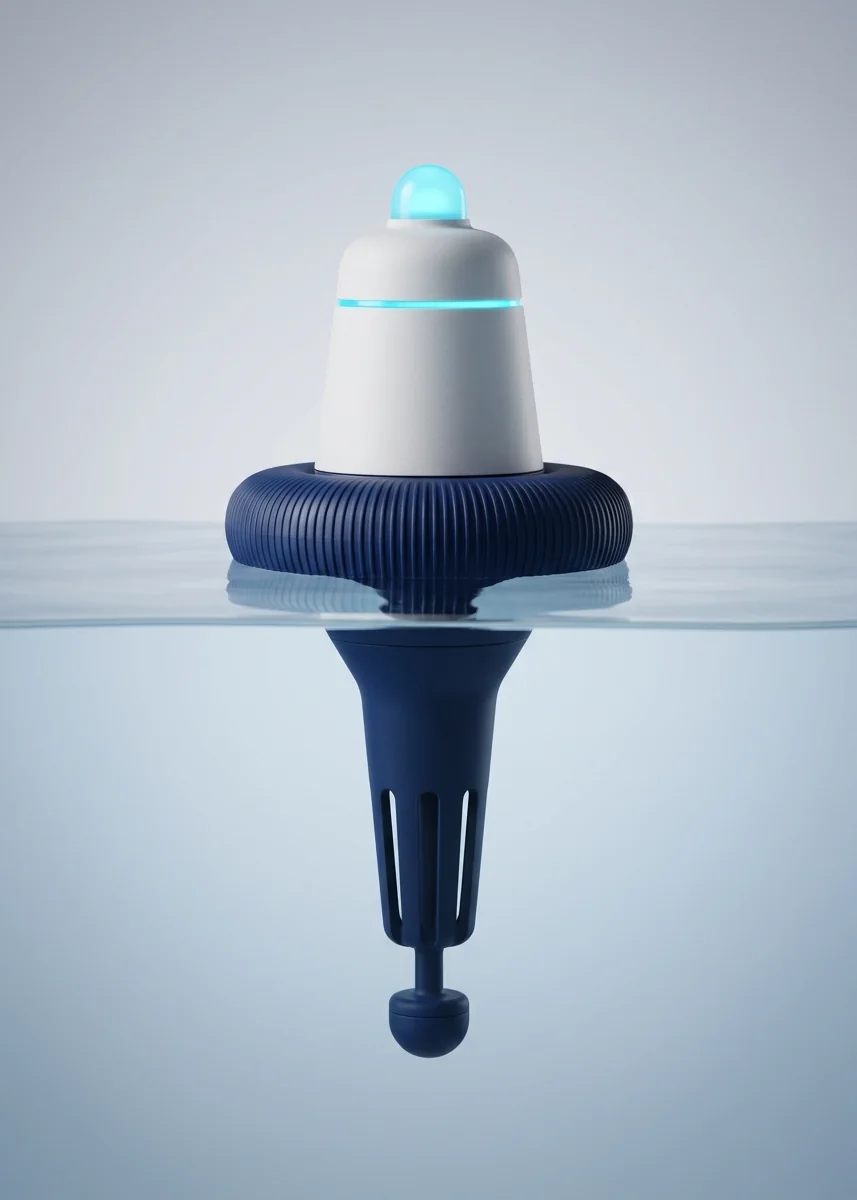
HydroLogik floats in the water and watches everything that turns a good weekend into a $10,000 repair — freezing, leaks, a dead pump, a lid left open — then sends the alert over cellular, or over satellite when the grid is down. No Wi-Fi. No monthly fee. No test strips.
- 3–5 yr
- battery, never charged
- $0
- per month, forever
- 11
- types of faults it detects
$3,000–$20,000
What a frozen tub costs
A cracked shell, a split manifold or a burst heater. The repair bill arrives in one piece, in the middle of winter, and the tub is out for weeks.
4–8 hours
The window you actually have
That is roughly how long a well-insulated tub takes to go from warm to freezing once the power fails. Long enough to fix — if somebody knows.
0 of them
Hot tubs that tell you
No mainstream hot tub ships with freeze, leak or power-loss alerting. The tub sits there, unmonitored, holding 1,500 litres of hot water.
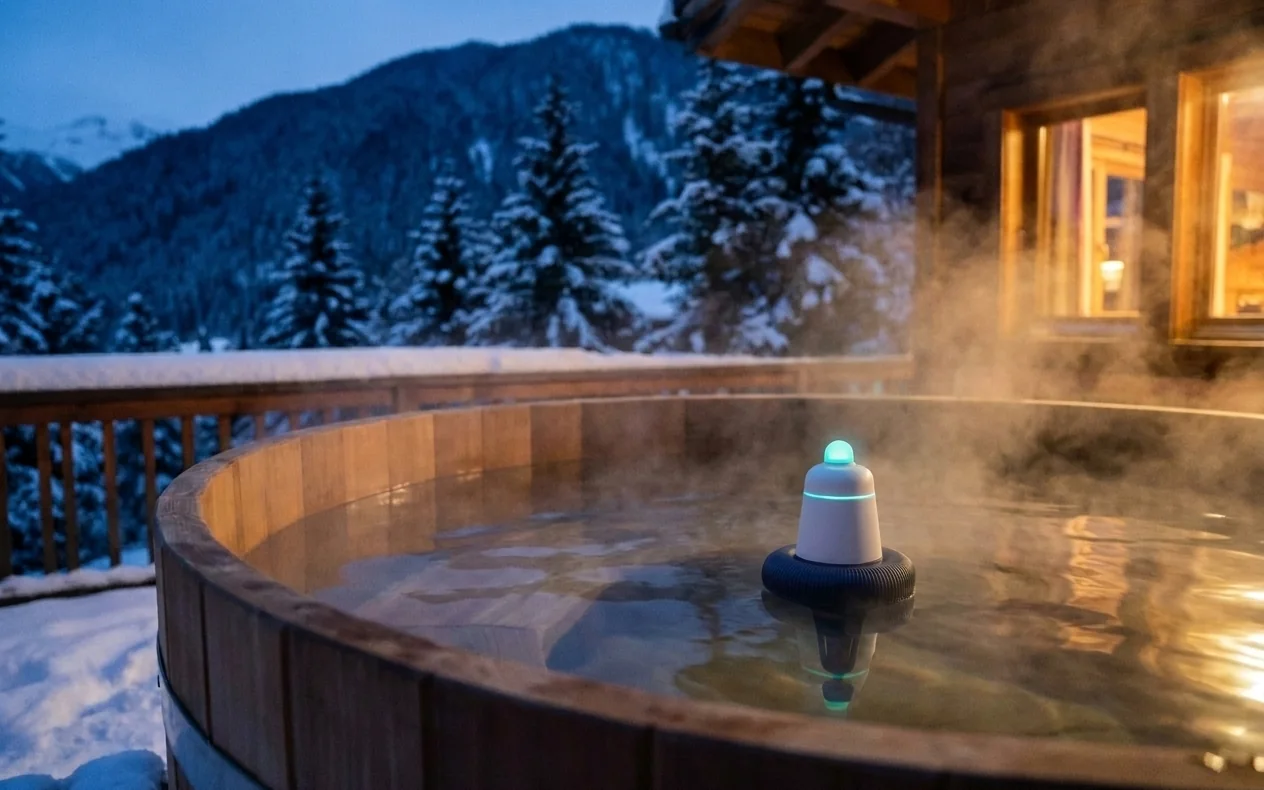
The power goes out at 2 a.m. and nobody is at the cabin.
HydroLogik notices the circulation stop, watches the water cool along the unheated curve it learned for your tub, and works out how long you have. Then it sends that — the temperature, the rate, the hours remaining — over LTE-M. If the cell tower is down too, it goes over satellite.
There is no router in the path, because the device never needed one.
Every fault it detects, and howA smoke alarm for the most expensive thing in your garden
Every one of them detected on the device itself, not inferred in a data centre afterwards. If the link is down the alerts queue and go out the moment anything works.
Freeze, with a countdown
Warns at 10 °C and falling, critical at 5 °C — and tells you the predicted hours to zero so you know whether to drive up or call a neighbour.
Leaks, fast and slow
A pressure pod on the tub floor gives a fixed reference depth. Millimetres a day is an advisory; centimetres in an hour is a critical alert.
Power loss, inferred
The device has no mains connection — that is why it survives an outage. It infers the outage from stopped circulation plus the cooling curve.
Lid left open
Air-zone temperature converging on ambient, corroborated by daylight. After 30 minutes you get the alert and the heat-loss rate in °C per hour.
A pump starting to labour
Pump ripple is visible in the pressure signal. When its amplitude and frequency drift off the baseline learned in week one, something is wearing out.
Chemistry, by probe
pH, sanitizer activity by ORP and conductivity — real millivolt measurements from lab-grade probes, not a camera photographing a colour pad.
What the Guardian watches, and how the alert gets out
Five measurement channels, the physics behind each fault class, and the path an alert takes off the property when the power and the cell tower are both down.
Read the transcript Hide the transcript
It is two in the morning and the power has gone out at the cabin. Fifteen hundred litres of water at thirty-eight degrees, a pump that has stopped, and nobody back until Sunday. A well-insulated tub goes from warm to freezing in four to eight hours. At the other end of that is a cracked shell, a split manifold or a burst heater. The Guardian is one buoy. It floats in the water, you claim it on your phone once, and then it stays there for years. No mains connection, no router, no monthly fee. Five channels do the work: water temperature, air temperature and light in the top cap, and a pressure transducer on a weighted tail, resting on the tub floor. The buoy rides the surface, so its own depth never changes. The tail is the fixed reference, and water level and leak rate come straight off it. Millimetres a day is an advisory. Centimetres in an hour is critical. A running pump puts a ripple into that same signal. Thirty seconds of it says whether the pump is running, whether it is labouring, and whether the filter is loading up. Temperature is the alert that pays for the device. The monitor learns what your tub does with the heater off, warns at ten degrees and falling, and puts the hours you have left in the alert. About four, on this night. Critical at five. It infers the outage rather than being told about it: no circulation, and water cooling along that learned curve. The device has no mains connection, which is why it is still reporting when the house is dark. A lid left open shows in the top cap, and alerts after thirty minutes with the heat-loss rate. The same sensors catch a stuck contactor from the other side: a warning at forty-one degrees, critical at forty-three. Every detector runs on the device, because the tub still needs protecting when the backhaul is down. Alerts leave over cellular; if a critical one cannot get out that way, the same modem and the same antenna fall back to narrowband satellite. It runs on one nineteen amp-hour lithium cell, never charged and never swapped. A Guardian draws about four hundred milliamp-hours a year, with no chemistry probes to calibrate and nothing to drift. The HydroLogik Guardian. A smoke alarm for the most expensive thing in your garden.
The tub looks after itself. The water is a part-time job.
The Guardian is the smoke alarm: it protects the asset and then leaves you alone. The Sentinel is for the other problem — the one you actually touch every week. Keeping 1,500 litres of hot water in balance, by hand, out of a bag of powders and a printout from a shop.
What that looks like now
-
Fill a bottle and drive to the shop
Every week or two, elbow-deep in the tub with a sample jar, then a wait at a counter while somebody runs it through a bench meter.
-
Do the arithmetic at the kitchen table
A printout of six numbers, a tub volume you are honestly guessing at, and a dose worked out from the back of a bucket. Get the order wrong — acid before alkalinity — and you have undone the last two adjustments.
-
Wait, and find out on Saturday
Chemistry moves over hours. By the time the water has settled, the reading you dosed against is three days old and the four people who changed it have been and gone.
Some people genuinely enjoy that. Most inherited it with the tub, and would happily never see a test strip again.
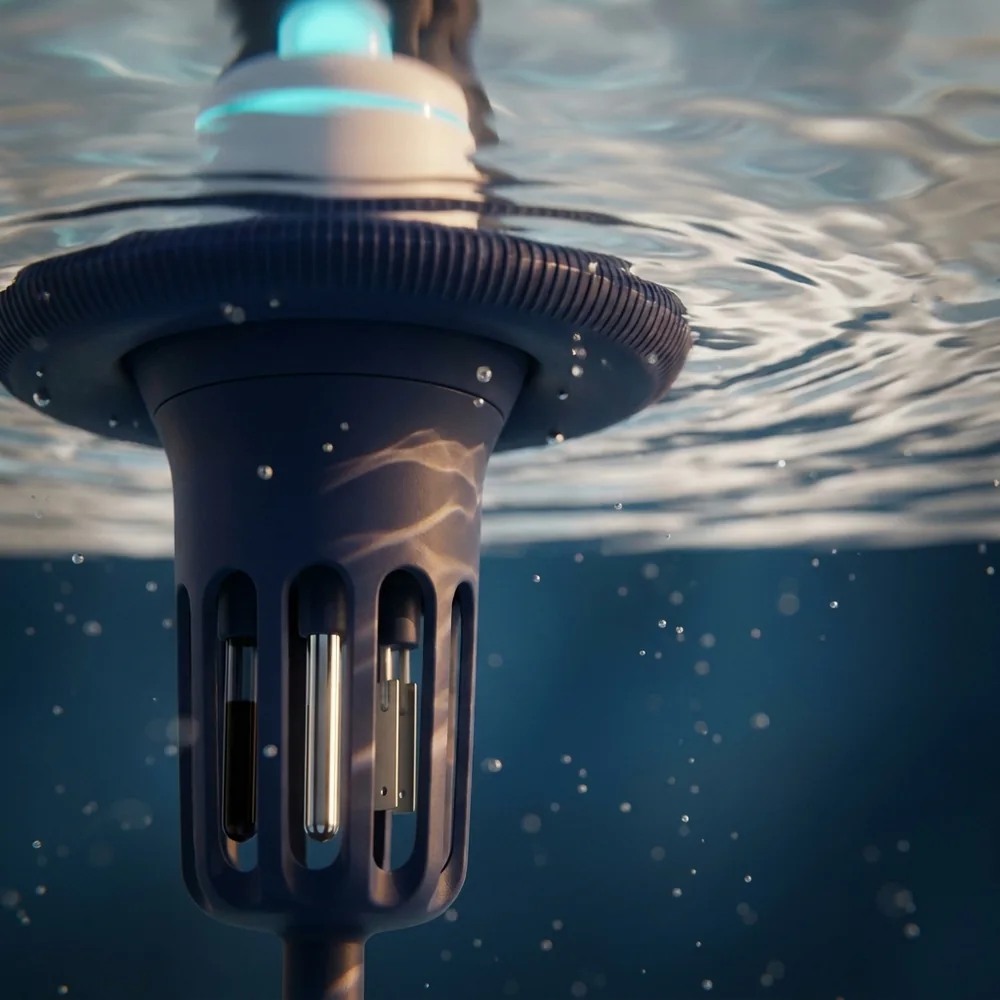
Inside the probe guard: the pH electrode, the platinum ORP electrode and the conductivity cell, standing in the water they are measuring.
The Sentinel: your water, measured in millivolts
Why a test strip can read fine on a tub that is not disinfecting, what the three probes behind the galvanic barrier actually measure, and how the drain forecast turns a guess into a date.
Read the transcript Hide the transcript
If you look after your own water, you know the ritual. A sample jar, a drive to the shop, six numbers on a printout, and a dose worked out at the kitchen table from the back of a bucket. And chemistry moves over hours. By the time the water has settled, the reading you dosed against is three days old. Getting it wrong is not cosmetic. Below pH seven point two the water pulls copper out of the heater element; above seven point eight it puts the same minerals back as scale. Neither shows in the water — it shows in the cabinet, months later. And a test strip reading three parts per million can still be a tub that is not disinfecting, because pH and stabiliser have taken the strength out of the chlorine. So the Sentinel measures the thing that decides it: O.R.P., the killing power actually present in the water, in millivolts. Six hundred and fifty to seven hundred and fifty is the ordinary disinfection range. It carries three probes below the waterline. A high-impedance glass electrode for pH. A platinum electrode for O.R.P. And a four-terminal conductivity cell. All three sit on an electrically isolated island, which is what stops the classic failure: two wet probes sharing a ground through the water, and both readings dancing. Twelve measurement cycles a day, thirty seconds each. Tonight, pH is eight point one and high. Sanitizer is six hundred and fifteen millivolts and low. Buffer strength is holding, and dissolved solids are in band. So you are told what to add for your measured volume, and in what order. Thirty-five grams of pH Down first, because chlorine added at eight point one is largely wasted. Then eight grams of chlorine granules, once the pH has settled. The last reading is the one no strip can give you. Everything you have ever added is still in the water, so dissolved solids only ever climb — and a line that only climbs is a line you can forecast. Two thousand four hundred and twenty parts per million today, rising about a hundred and seventy a week. That reaches the three thousand ceiling on the first of October — twenty-four days out, and good to about four days once it is inside a fortnight. And it measures your slope rather than assuming a household, so a busy fortnight steepens the line, the date moves, and you are told that it moved. Everything the Guardian watches is still in there — freeze, leaks, power loss, the lid, the pump — on the same board, out over the same cellular and satellite path. The HydroLogik Sentinel. Your water in millivolts, and the trip to the shop deleted.
And when it drifts, it drifts quietly
Nothing about bad water chemistry announces itself on the day it starts. All three of these are a fortnight of drift that nobody measured.
It eats the equipment, quietly
Below pH 7.2 the water is CORROSIVE and starts pulling copper out of the heater element and hardening the pump seals. Above 7.8 it puts the same minerals back as scale, on the element, in the jets and around the seals, and the heater runs hotter and longer until it stops. Neither shows up in the water - it shows up in the cabinet, months later.
It shows, the day the guests arrive
Cloudy water, a chalk line at the tile, biofilm greying the jet faces and a smell that people mistake for too much chlorine when it is the opposite. All of it is a fortnight of drift that nobody measured.
It can make people ill
Water at 38 °C with the sanitizer flat is a culture medium. Pseudomonas folliculitis — the rash people call hot tub itch — is what sitting below the disinfection band actually buys, and a test strip that reads 3 ppm can still be a tub that is not disinfecting.
Four numbers that decide everything else
The Sentinel carries the isolated chemistry island — a high-impedance pH probe, a platinum ORP electrode and a conductivity cell behind a galvanic barrier, so none of them interferes with the others. Twelve measurement cycles a day, in millivolts, from electrodes that live in the water.
| Reading | In band | How it is measured | Why it decides something |
|---|---|---|---|
| pH | 7.2 – 7.8 | High-impedance probe, temperature-compensated | The one that decides whether the water corrodes your equipment or scales it. It is also what makes the sanitizer work: at pH 8.0 less than half as much of the same chlorine is in the form that actually disinfects. |
| Sanitizer, as ORP | 650 – 750 mV | Platinum electrode, same measurement cycle | ORP is the killing power actually present in the water, not the number on the bottle. A tub can read 3 ppm on a strip and still be failing to disinfect, because pH and stabiliser have taken the strength out of it. |
| Buffer strength | Holding, or weakening | Relative trend, from how far a dose moves pH and how long it holds | Buffering is what holds pH still. As it weakens, every dose you add swings the pH further and holds it less long — which is what "I can never keep it stable" actually is. Reported as a direction rather than a number: nothing floating in a tub is a titration, so there is no parts-per-million figure here to quote at you. |
| Dissolved solids | 1,000 – 3,000 ppm | Derived from the conductivity cell | Everything you have ever added is still in there. Near the top of the band the water stops responding to chemicals at all, and no amount of dosing fixes it — only fresh water does. This is the number the drain forecast is built on. |
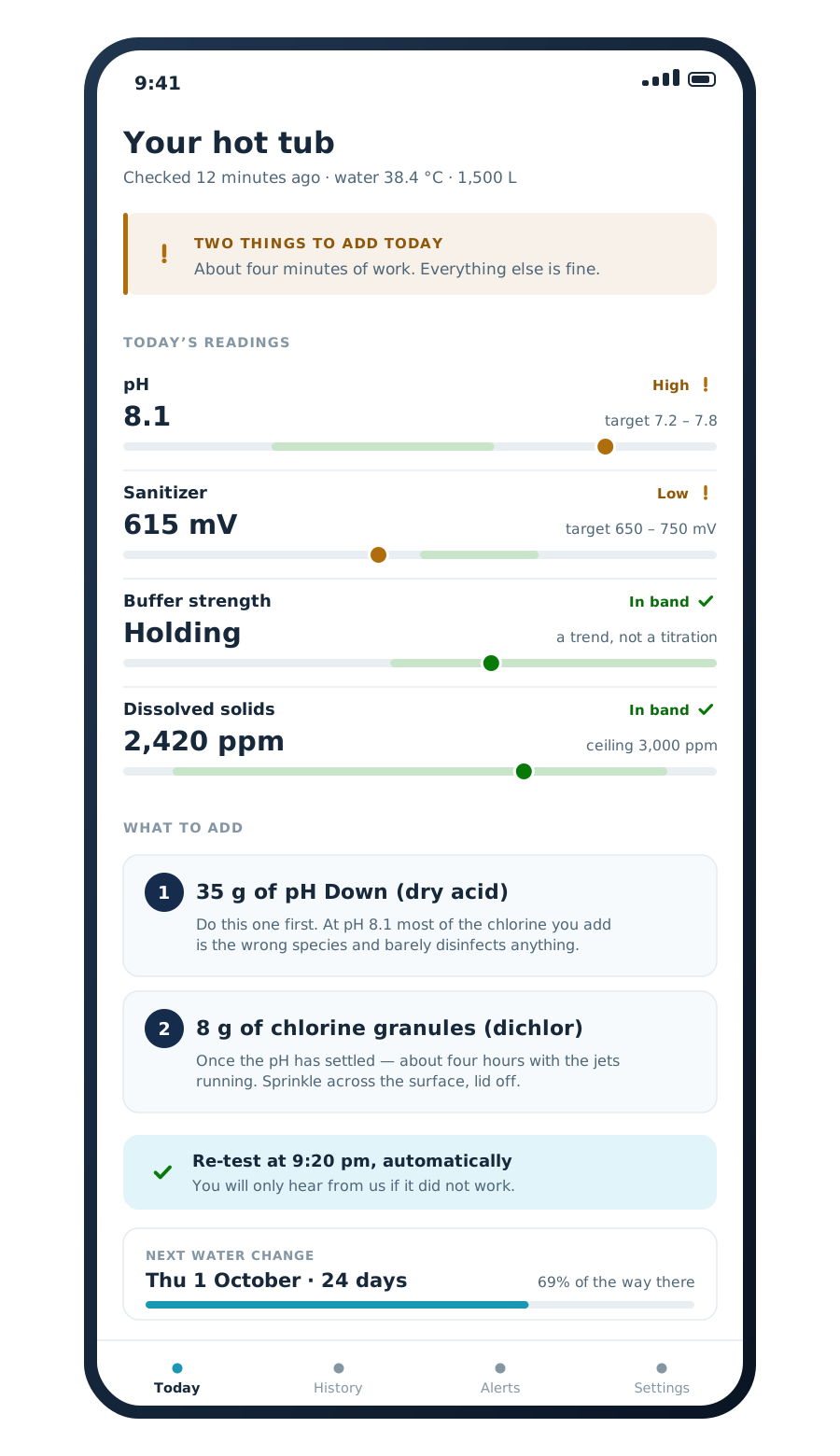
You are handed the dose, not the numbers
Six readings on a printout is a problem restated, not an answer. When something drifts out of band the Sentinel works the correction out for your tub and tells you what to put in — one product at a time, in grams and millilitres, with the reason next to it.
-
In an order that does not undo itself
Chlorine added at pH 8.1 is mostly the wrong species and barely disinfects anything, so the pH correction comes first — and the app says why, rather than just listing two jobs.
-
For your tub, not a generic thousand litres
The volume is measured during setup, so a dose is arithmetic instead of a guess at how big a scoop is. That is the difference between 35 grams and "a bit of pH Down".
-
And it checks its own work
The re-test is already scheduled. You hear from the monitor again only if the dose did not land — which is the part that actually removes the job from your week.
It tells you the date the water is finished
Sooner or later no amount of chemistry saves a hot tub and the water simply has to go. Everybody guesses at when — three months, or whenever it starts to look tired. The Sentinel does not have to guess, because the number that decides it only ever moves in one direction.
The line only ever goes up
Every dose of chlorine, acid, alkalinity increaser and clarifier leaves salt behind, and nothing takes it out again but fresh water. Topping up after evaporation dilutes it a little; only a water change resets it. So the conductivity cell is reading a line that climbs, and that is what makes it forecastable at all.
It learns the slope of your tub
How fast that line climbs depends on how much you dose and how many people get in, so the monitor measures it rather than assuming a household. Bathing shows up as a sharp drop in ORP, so a busy fortnight steepens the slope and the date moves — and you are told that it moved.
It watches the water stop responding
As solids build, the water's buffering saturates and pH gets harder to hold: a dose moves it less and it drifts back sooner. That loss of buffer is the second signal, and it is why the forecast can turn before the solids figure on its own would.
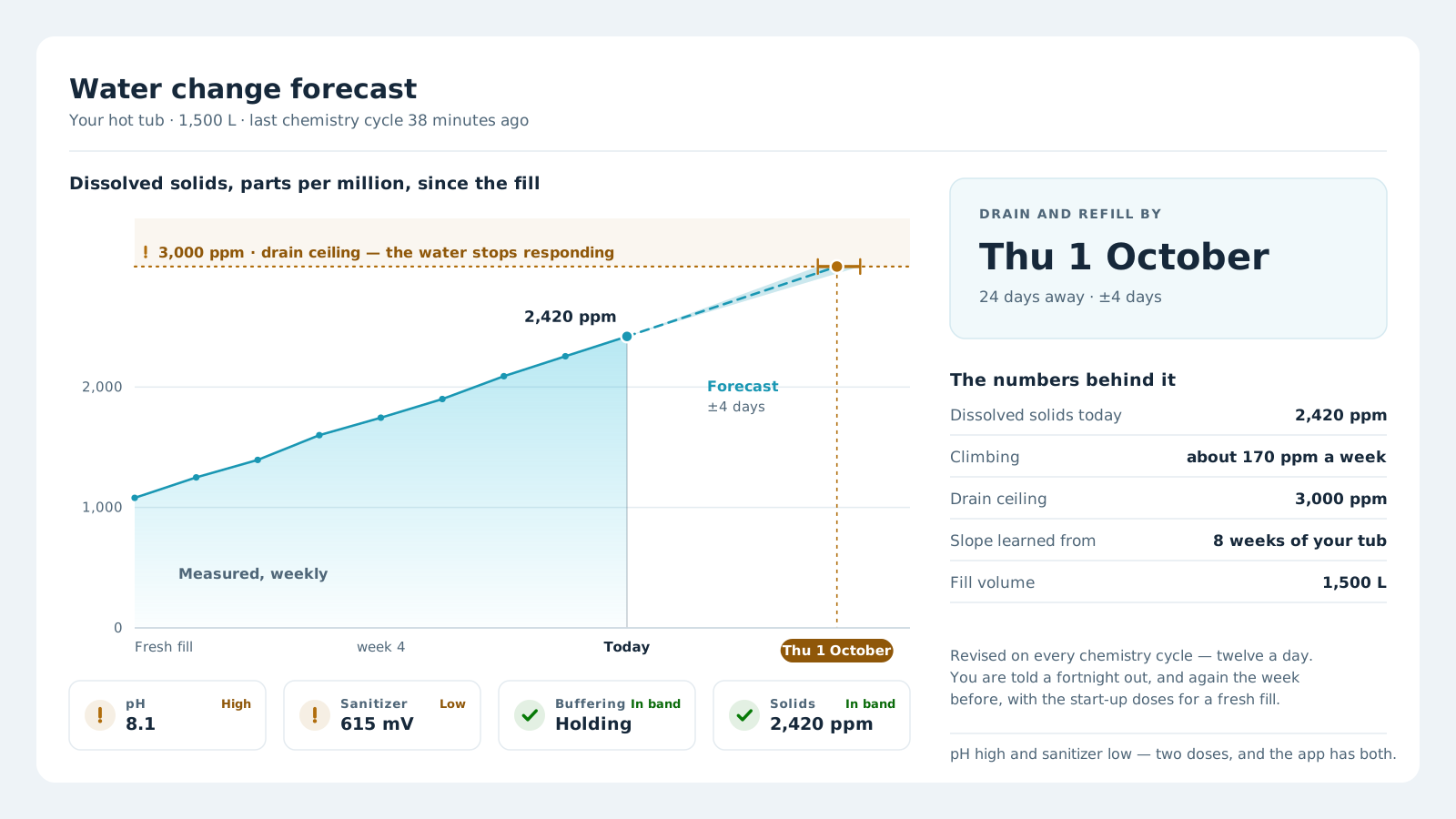
Drain and refill by Thursday 1 October. Dissolved solids 2,420 ppm, climbing about 170 a week — that reaches the 3,000 ppm ceiling in 24 days. Your fill is 1,500 L and the start-up doses are in the app.
- Notice you get
- about six weeks
- Long enough to book a Saturday, order the filter cartridge and pick up start-up chemicals in one trip.
- How close it lands
- ±4 days once the date is inside a fortnight
- It tightens as the date approaches, because every cycle adds another week of your slope.
The chemistry island is fitted to the Sentinel and the Summit Edition. A Guardian ships without the probes, so it watches for the faults and says nothing about the water — which is the right answer for a tub somebody else services.
The Sentinel, $899 CAD →Two radios, no router, no subscription
Wi-Fi was the first thing we designed out. It is the part of every competing product that fails exactly when it matters.
LTE-M, every day
Telemetry batches ride low-power cellular on their own SIM. Nothing to pair, nothing to re-enter when you change your broadband password.
Satellite, when it counts
Critical alerts — freeze, rapid water loss, suspected power loss — escalate to NB-NTN satellite over the Skylo network when there is no cell coverage.
Prepaid for life
The connectivity is paid for once, in the purchase price, for the service life of the device. There is no plan to renew and no card on file.
Both radios are native to the same chip, and so is the GNSS receiver the satellite link needs for timing. One part, one certification, one antenna path — the engineering is on the how-it-works page.
Backyard Pools
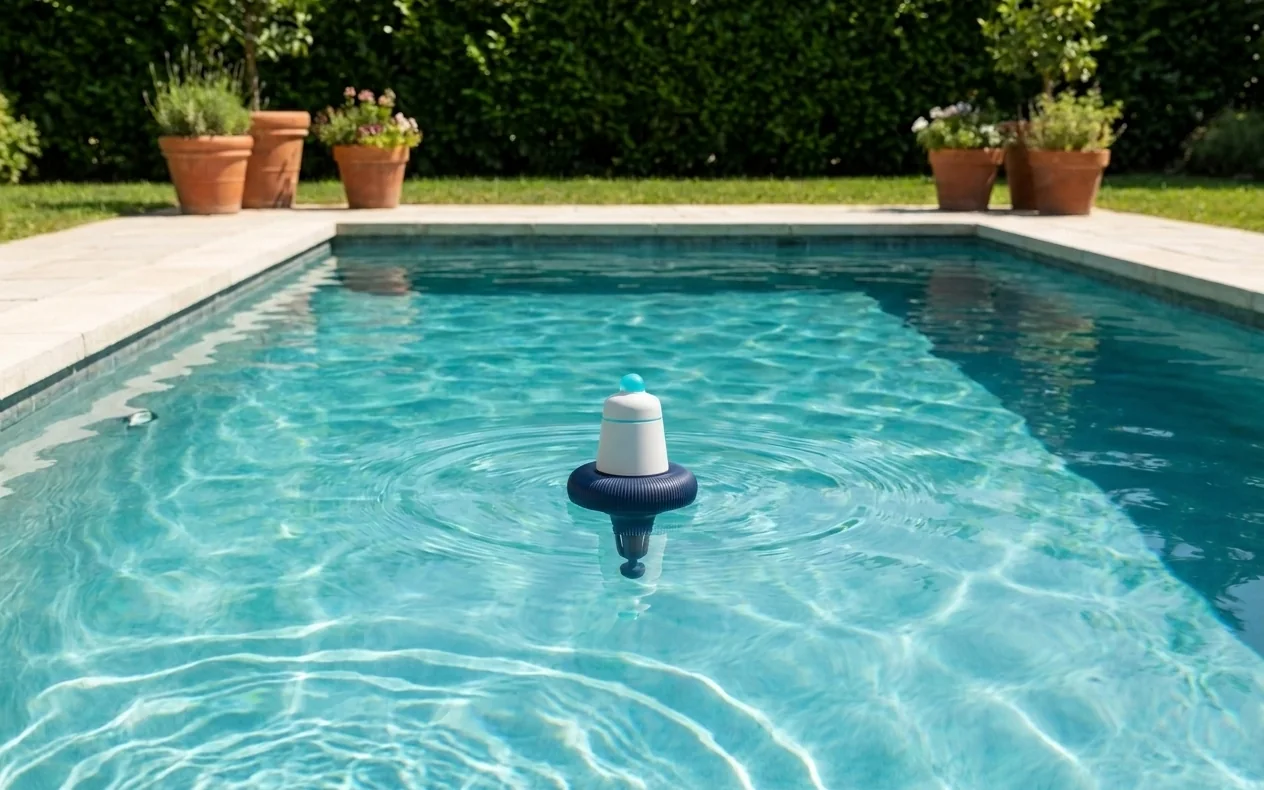
The same buoy, the same alerts, a longer tail for the deeper water. Chemistry doses are calculated for your actual volume, so the guidance is in millilitres rather than in vague scoops.
- Free-floating — no skimmer, no plumbing, no electrician
- Trimmable 900 mm sensor tail for the pressure pod
- Chlorine and bromine rated, salt-water compatible
- Winterisation watch: keeps reporting after the pool closes
Three models. No subscription on any of them.
Guardian
Asset protection. Nothing else to think about.
$599 CAD, once
- Freeze prediction with time-to-freeze in the alert
- Leak and rapid water-loss detection
- Power-loss inference — no mains connection required
- Lid-open and heat-loss alerts
- Labouring pump and clogged-filter advisories
- LTE-M with satellite escalation for critical alerts
Sentinel
Everything the Guardian does, plus the chemistry.
$899 CAD, once
- Everything in the Guardian
- pH by high-impedance probe
- Sanitizer activity by ORP — the killing power, not the label
- Conductivity, and a buffer-strength trend
- Dosing guidance in millilitres and grams for your tub volume
- Drain forecast — the date your water is finished, weeks ahead
- Galvanic isolation so pH and ORP never fight each other
Summit Edition
For the tub at the end of the mountain road.
$1,149 CAD, once
- Everything in the Sentinel
- Extended-temperature cell, rated to −40 °C
- Ten times the lifetime satellite message allowance
- Escalation chain — second and third contact, then your dealer
- Property-manager dashboard seat included
- Five-year warranty
Buy it once
The sticker price is higher. Three years in, it is not close — and there is no month where a lapsed card turns your monitor into an ornament.
| Product | Hardware | Recurring | 3-year total |
|---|---|---|---|
| Subscription monitor, typical | $499 | US$29–39 per month | $1,543 |
| Cartridge monitor, typical | $295 | US$150–200 per year in cassettes | $619 |
| HydroLogik Sentinel | $899 | Nothing, ever | $899 |
Competitor pricing is indicative, from publicly listed prices and published consumable costs at the time of writing. Check current pricing before relying on it.
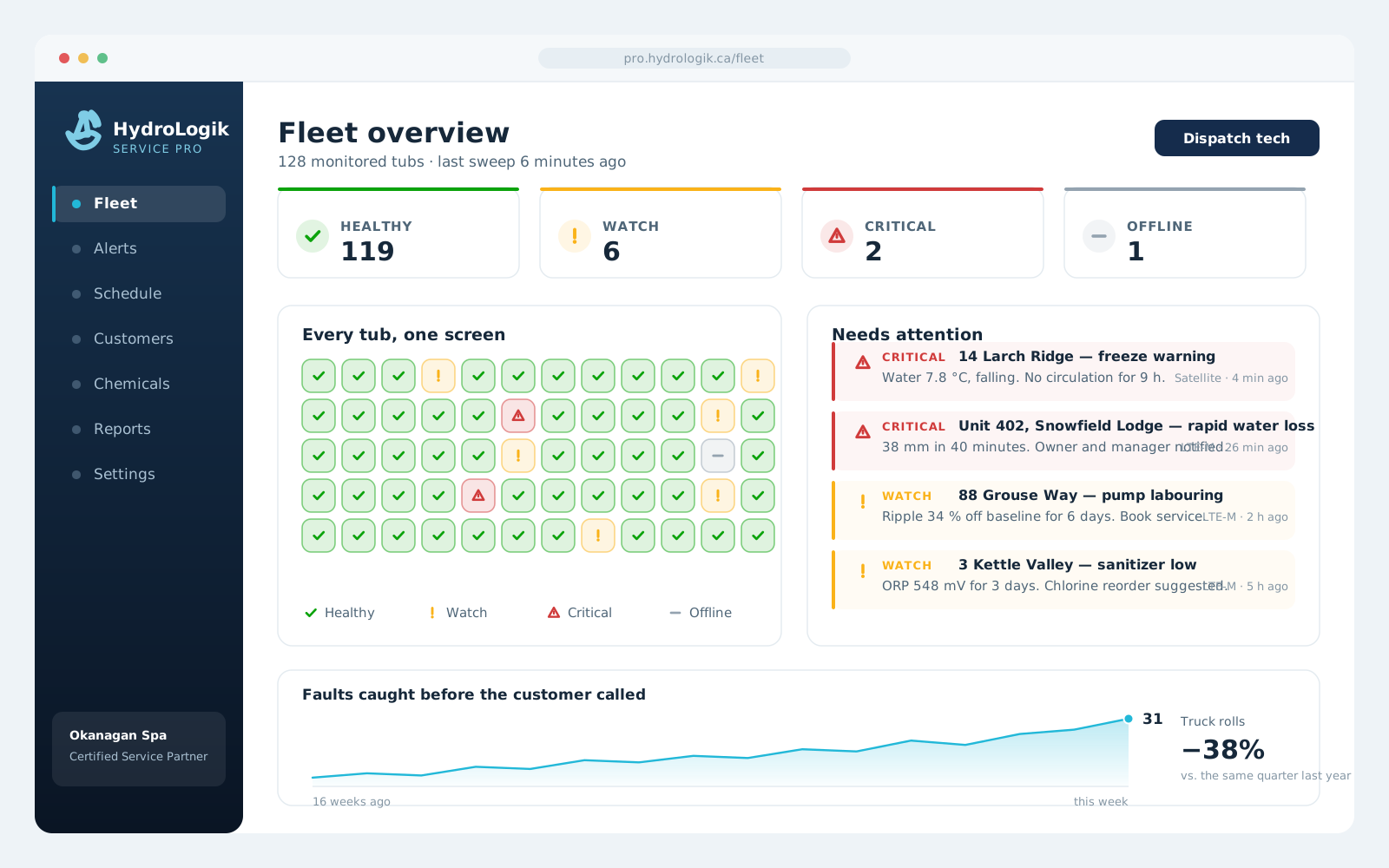
A 24/7 technician in every customer's tub
Every unit you sell becomes a service lead, a chemical reorder and a customer who does not drift to a big-box store. The fleet dashboard shows all of them on one screen.
It only has to be right once.
One freeze caught is the device paid for several times over. Everything after that is water you never had to think about.